
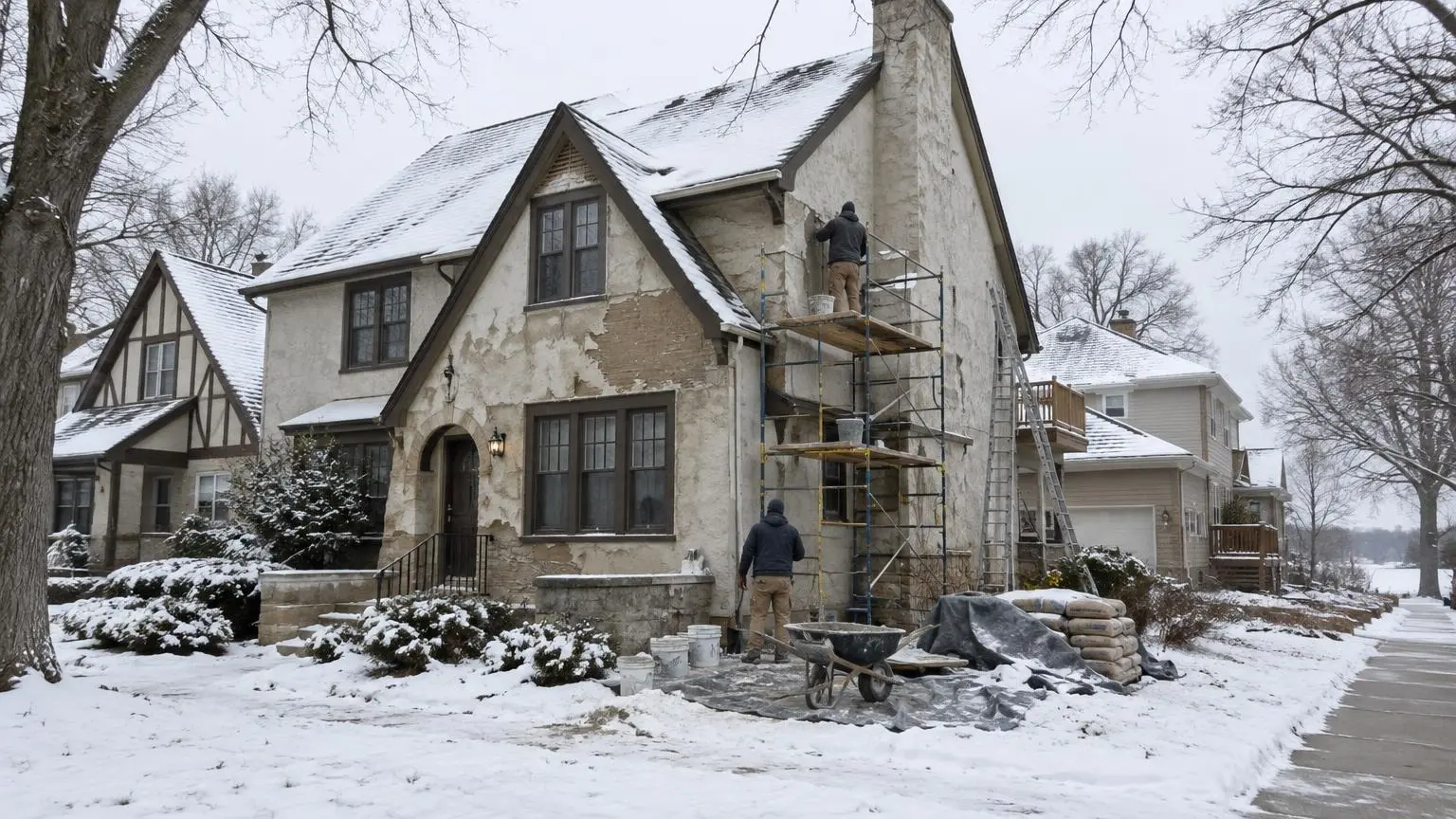
Probe testing and wall rebuilds
Stucco Moisture Testing & Remediation in Minneapolis, MN
The worst stucco damage is behind walls that look fine. Testing shows where it is; remediation removes it and rebuilds the wall properly.
- Free on-site estimates
- Written, itemized quotes before any work
- Cause of the damage found before patching
Finding Hidden Water Before It Finds the Framing
Stucco moisture testing and remediation deal with the problem Minnesota has learned about the hard way: water getting behind stucco and staying there. When the City of Woodbury surveyed its stucco homes built from about the late 1980s through 1999, 26% showed visible moisture damage in 1999, and by 2011 the city reported that 451 of 670, about 67%, had failed and been repaired. Many of those repairs involved structural damage and mold, and the city reported many cost $150,000 or more. The damage often stays hidden for years because the stucco itself can look normal.
Who should test
- Buyers of a stucco home built since the late 1980s, before the purchase is final
- Sellers who want to know what a buyer's inspector will find
- Owners planning a recoat, paint job or crack repair on a newer stucco home
- Anyone seeing stains below windows, soft spots, or interior signs like damp drywall or musty smells near exterior walls
How probe testing works
Minnesota inspectors who specialize in stucco use invasive probe testing. Small holes, about 3/16 inch, are drilled through the stucco at the spots most likely to leak, such as below window corners, at roof-to-wall intersections, beside decks and near the bottom of walls. A probe reads the moisture content of the sheathing behind. Dry, firm readings are good; high readings or soft, missing sheathing call for further investigation. The holes are sealed with color-matched caulk and are usually visible only up close. Infrared scans alone are considered inconclusive for stucco, because a cool spot does not prove water has reached the sheathing. Exterior testing cannot be done in rain and is difficult below freezing.
Testing during a home sale
A seller has to agree to holes being drilled in their house, and testing companies usually require the seller to sign a release first. Plan for that in your inspection period. Results show readings at each test point, which helps buyer and seller talk about the repair in concrete terms rather than guesses.
What remediation involves
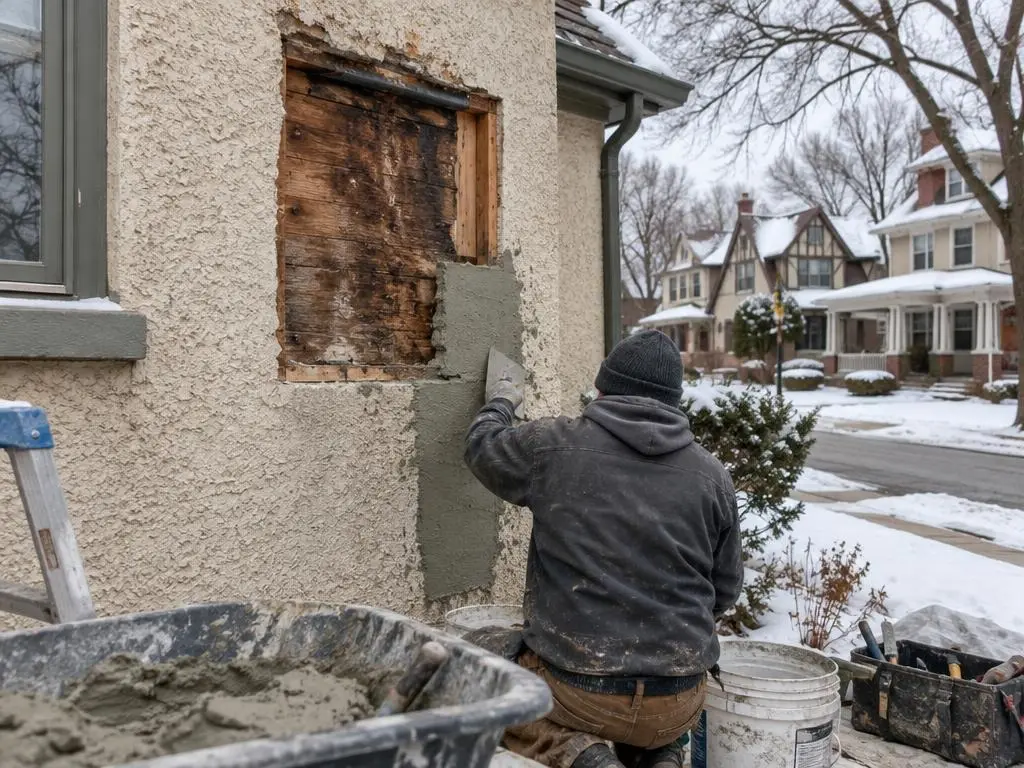
When readings show wet or damaged sheathing, the affected stucco is removed, typically from whole wall sections so the damage can be traced to its edges. Rotted sheathing and framing are replaced, and any mold on the exposed wood is addressed. The wall is then rebuilt with current details: a water-resistive barrier (Saint Paul, for example, requires two layers of Grade D building paper over wood sheathing), proper flashing at windows, doors and decks, kickout flashing where a roof meets a wall, and a weep screed at the base so water that gets behind the stucco can drain out. New lath and three coats of stucco finish the job.
Permits and inspections
Minnesota requires a building permit for re-siding, and its guidance says rotted sheathing or framing exposed during removal must be replaced, with the city contacted about inspecting those repairs. Minneapolis requires building permits when alterations are made to exterior walls. Remediation usually falls in that category, and inspections of the barrier and flashing happen before the new stucco covers them.
What This Covers
Testing tells you what is behind the wall; remediation fixes it.
Probe moisture testing
Readings at windows, roof lines, decks and wall bases, with results at each point.
Targeted wall openings
Small sections opened to confirm what high readings mean before a full tear-off.
Sheathing and framing repair
Rotted wood cut out and replaced, with mold on exposed framing addressed.
Rebuilt drainage details
New building paper, flashing, kickout flashing, weep screed, lath and three coats.
Typical Testing & Remediation Costs
| Job | Published range |
|---|---|
| Whole-house probe test, Minnesota inspector (up to 3,000 sq ft) | from $845 |
| Single wall probe test, Minnesota inspector | $545 |
| Inspection with moisture probe testing (national) | $500 to $1,000 |
| Remediation per sq ft (national) | $20 to $50 |
| Re-stucco after remediation (national) | $7,500 to $15,000 |
Minnesota testing prices from Structure Tech's published rates; national ranges from HomeGuide (February 2026) and Fixr (March 2025). Woodbury reported many remediations on 1990s stucco homes cost $150,000 or more. Your written estimate is the price.
How It Works
1. Plan the test points
We pick locations based on the windows, roof lines, decks and grade of your house.
2. Read and record
Probe readings are taken and recorded at each point, and holes sealed with matched caulk.
3. Scope the repair
High readings are confirmed and the repair area mapped before any quote.
4. Remediate and rebuild
Damaged wood is replaced and the wall rebuilt with current drainage details, with inspections.
Stucco Moisture Testing & Remediation Questions
How much does stucco moisture testing cost in Minnesota?
Structure Tech, a Minnesota inspection company, lists whole-house probe testing from $845 for homes up to 3,000 square feet and $545 for a single wall. HomeGuide puts inspections with moisture probes at $500 to $1,000 nationally.
Does moisture testing damage stucco?
It leaves small 3/16-inch holes at each test point. They are sealed with caulk matched to the stucco color and are usually visible only up close. The probes pass through the moisture barrier, which is why the holes are sealed deeply.
Is infrared enough to check stucco?
Minnesota stucco inspectors consider infrared inconclusive on its own. A cool spot on a scan does not prove water has reached the sheathing, and wet sheathing does not always show up. Probe readings measure the sheathing directly.
Which Minnesota homes are most at risk?
Stucco homes built from about the late 1980s on, especially those with windows lacking head flashing, roofs ending against walls without kickout flashing, decks attached through the stucco, or soil above the base of the wall. Woodbury found 67% of its stucco homes from that period had failed.
Stucco Moisture Testing & Remediation Service Areas
- Stucco Repair in Minneapolis, MN
- Stucco Repair in Saint Paul, MN
- Stucco Repair in Edina, MN
- Stucco Repair in Bloomington, MN
- Stucco Repair in Richfield, MN
- Stucco Repair in St. Louis Park, MN
- Stucco Repair in Minnetonka, MN
- Stucco Repair in Golden Valley, MN
- Stucco Repair in Plymouth, MN
- Stucco Repair in Maple Grove, MN
- Stucco Repair in Brooklyn Park, MN
- Stucco Repair in Roseville, MN
- Stucco Repair in Eden Prairie, MN
- Stucco Repair in Woodbury, MN
- Stucco Repair in Eagan, MN
- Stucco Repair in Burnsville, MN
- Stucco Repair in Wayzata, MN
- Stucco Repair in Shoreview, MN
Get a Stucco Moisture Testing & Remediation Estimate
Free estimates for stucco remediation; ask about testing.