
On Lake Minnetonka's north shore since 1854
Stucco Repair in Wayzata, MN
Careful, compatible repairs for older stucco, and honest moisture checks on the newer houses around them.
- Free on-site estimates
- Written, itemized quotes before any work
- Cause of the damage found before patching
Older Stucco on the North Shore
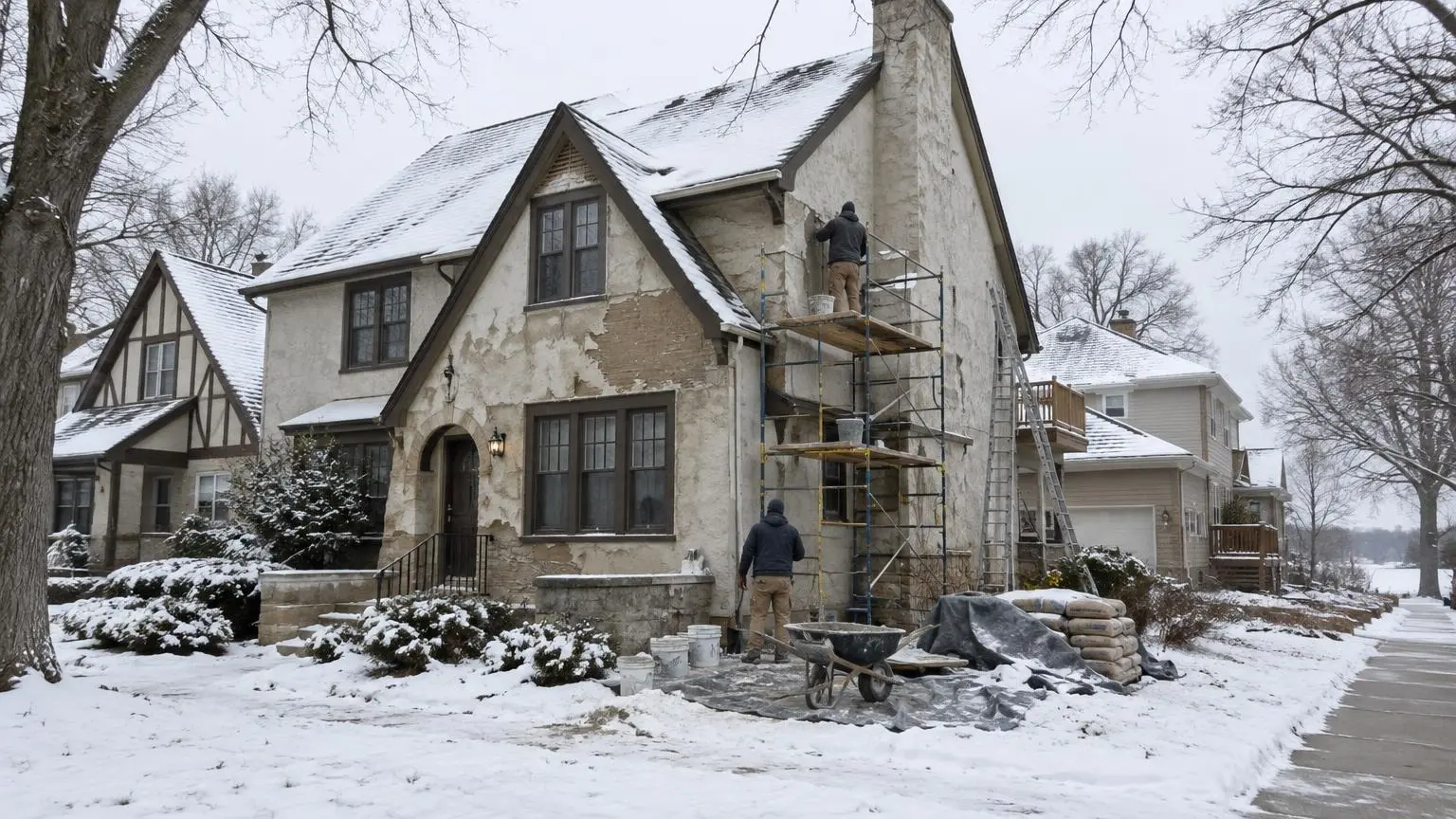
Stucco repair in Wayzata often means working on houses that predate modern cement stucco practices. Oscar E. Garrison platted the town in 1854 on the northern shore of Lake Minnetonka, it incorporated as a village in 1883, and the Great Northern Railway opened a new depot near downtown in 1906, according to Wikipedia. Families including the Bells, Pillsburys, Peaveys and Washburns built grand country estates along the Ferndale shore. Older homes in a town like this call for a slower, more careful kind of stucco work.
Why historic stucco needs a different mix
The National Park Service's Preservation Brief 22 explains that stucco use in the United States grew from about 1890 into the 1930s and 1940s, on bungalows, foursquares and Tudor and Mediterranean revival houses. Early stucco was largely lime-based; after about 1900 most stucco was portland cement with some lime. The brief warns that a hard portland patch in softer lime stucco can cause cracking around the repair. Matching the strength and makeup of the old material matters more than speed.
How we handle an older wall
- Look at the existing stucco to judge its age, hardness and finish before choosing a repair mix
- Remove only loose, failed material and keep sound original stucco in place
- Avoid overlapping new stucco onto the face of old stucco, which the NPS brief cautions against
- Match the texture by hand, and test color on a small area before finishing
- Schedule around cold weather, since the brief advises against stucco work below 40 degrees Fahrenheit or when frost is possible
Newer stucco in Wayzata
Not every stucco house here is old. Wayzata's population rose 20.2% between 2010 and 2020, from 3,688 to 4,434, and new construction and rebuilds sit alongside the historic homes. Stucco houses from the late 1980s onward fall into the period when Minnesota stucco began failing behind the surface, a pattern documented in the City of Woodbury's study of 670 homes. For those, the right first step is invasive moisture testing at windows, roof-to-wall joints, decks and low walls, not a cosmetic touch-up.
Lakeside exposure
Wayzata sits directly on the northern shore of Lake Minnetonka. Walls that face open water or take the brunt of storms see more wetting than sheltered ones. Minnesota inspector Reuben Saltzman notes that large overhangs and protected walls help prevent stucco failures, and the reverse holds too: exposed elevations with small eaves deserve a closer look at flashing and sealant joints.
Owners who plan for the long term
Wayzata's median age was 52.7 at the 2020 census, and the city had 2,496 housing units for its 4,434 residents. Many owners here are thinking about a house they will hold for years or pass on, which favors repairs done once and done compatibly over quick patches that need redoing.
Permits
Minnesota requires a building permit when a home is re-sided, plus a water-resistive barrier and flashing inspection and replacement of rotted sheathing or framing once siding is removed. For a historic building, ask the city whether any local review applies before work begins; we will help gather what is needed.
Request an estimate
Call (612) 482-6637 or send photos with the approximate age of the house. We will explain what kind of repair the wall needs and provide a written quote.
Wayzata History and Housing
- Platted in 1854. Oscar E. Garrison platted Wayzata in 1854 on the northern shore of Lake Minnetonka, about 9 miles west of Minneapolis, and it was incorporated as a village in 1883.
- Ferndale shore estates. Wayzata became home to a large collection of grand country estates along the Ferndale shore, built by families including the Bells, Boveys, Crosbys, Peaveys, Pillsburys and Washburns.
- Railroad-era downtown. After a long dispute with James J. Hill's railway, the Great Northern built a new depot near downtown Wayzata that opened in 1906, which Hill called the handsomest on the line.
- An older, growing population. Wayzata had 4,434 residents at the 2020 census, up 20.2% from 2010, with a median age of 52.7 and 2,496 housing units.
- Lime versus portland stucco. National Park Service Preservation Brief 22 notes that hard portland cement patches can crack softer historic lime stucco, and advises against stucco work below 40 degrees Fahrenheit.
Wayzata Questions
Can you repair the original stucco on an older Wayzata home without replacing it?
Often, yes. We remove only loose or failed material and patch with a mix matched to the strength of the original. Keeping sound historic stucco in place is usually better for the house than stripping it.
Why not just use modern stucco for the patch?
The National Park Service warns that hard portland cement patches can cause cracking in softer, lime-rich historic stucco. A compatible mix moves and breathes more like the original wall.
My lake home is newer stucco. What should I check?
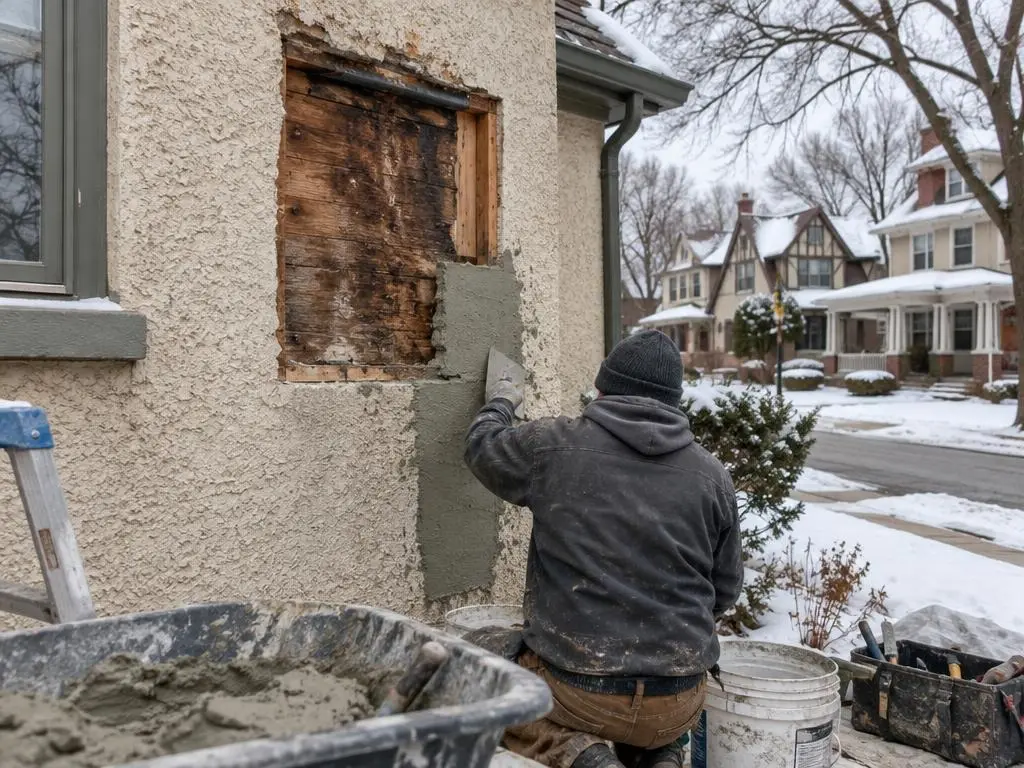
If it was built from the late 1980s on, consider invasive moisture testing, focusing on the windows and walls that face the lake or have little roof overhang. Leaking walls usually look fine from outside.
Can you work on stucco in late fall?
Only when temperatures cooperate. Preservation guidance advises against stucco work below 40 degrees Fahrenheit or with frost risk. We plan exterior work for the warmer months and use cold-season visits for estimates and planning.
Free Estimates in Wayzata, MN
Estimates for historic and modern stucco repair in Wayzata.
Stucco Repair Near Wayzata
- Stucco Repair in Minneapolis, MN
- Stucco Repair in Saint Paul, MN
- Stucco Repair in Edina, MN
- Stucco Repair in Bloomington, MN
- Stucco Repair in Richfield, MN
- Stucco Repair in St. Louis Park, MN
- Stucco Repair in Minnetonka, MN
- Stucco Repair in Golden Valley, MN
- Stucco Repair in Plymouth, MN
- Stucco Repair in Maple Grove, MN
- Stucco Repair in Brooklyn Park, MN
- Stucco Repair in Roseville, MN
- Stucco Repair in Eden Prairie, MN
- Stucco Repair in Woodbury, MN
- Stucco Repair in Eagan, MN
- Stucco Repair in Burnsville, MN
- Stucco Repair in Shoreview, MN