
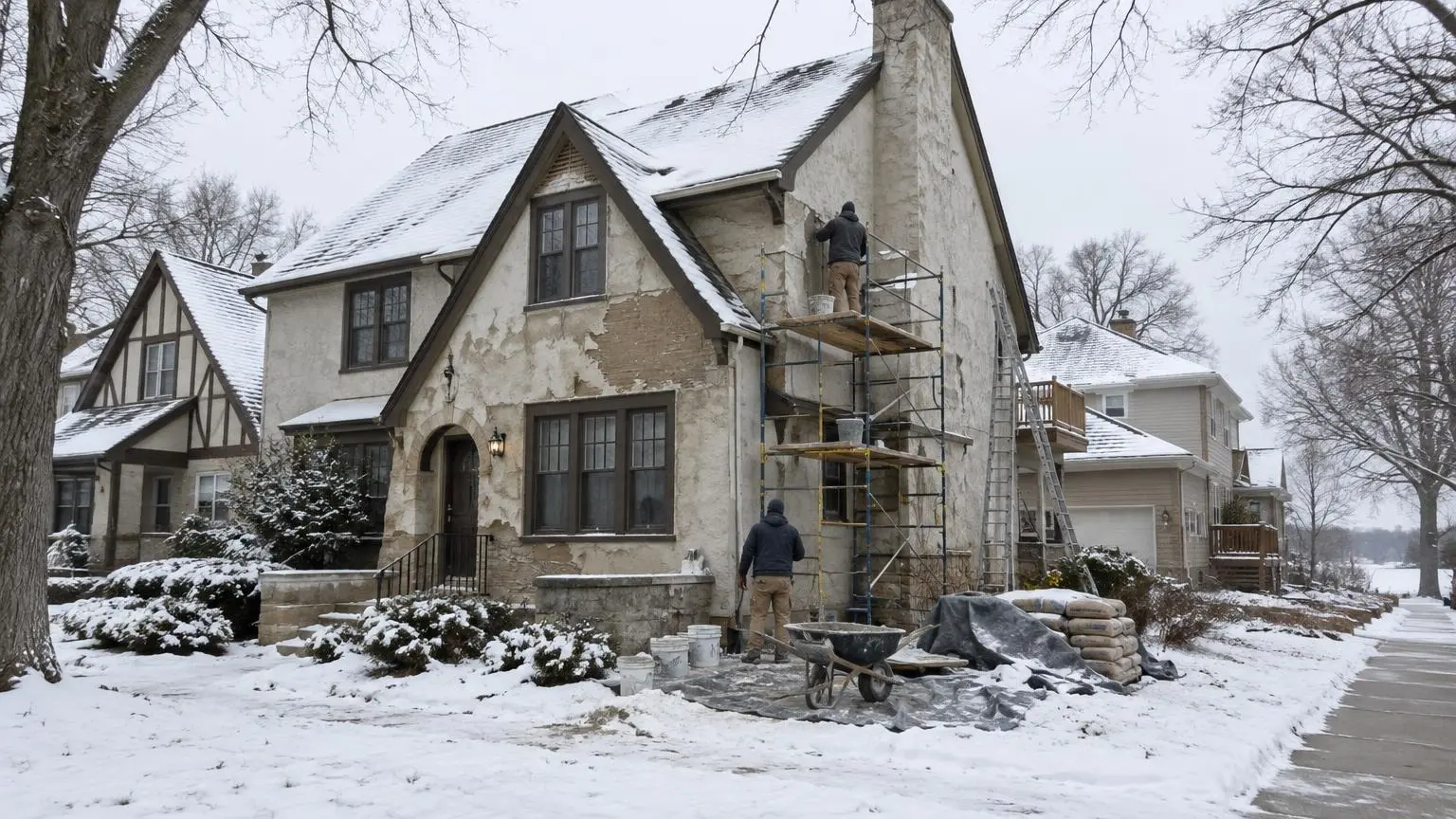
Rural until the 1960s, fully suburban now
Stucco Repair in Minnetonka, MN
Know what is behind the wall before you list, buy or recoat. We probe first and repair what the readings call for.
- Free on-site estimates
- Written, itemized quotes before any work
- Cause of the damage found before patching
Minnetonka Stucco: Find Out What the Wall Is Hiding
Many stucco repair projects in Minnetonka start with a question, not a crack: is this house safe to buy, or ready to sell? That makes sense in a city where 71.6% of homes are owner-occupied and the median owner-occupied value is $475,800, according to Census estimates for 2020 to 2024. When a stucco home changes hands at that level, nobody wants to learn about wet sheathing after closing.
Why looking at the wall is not enough
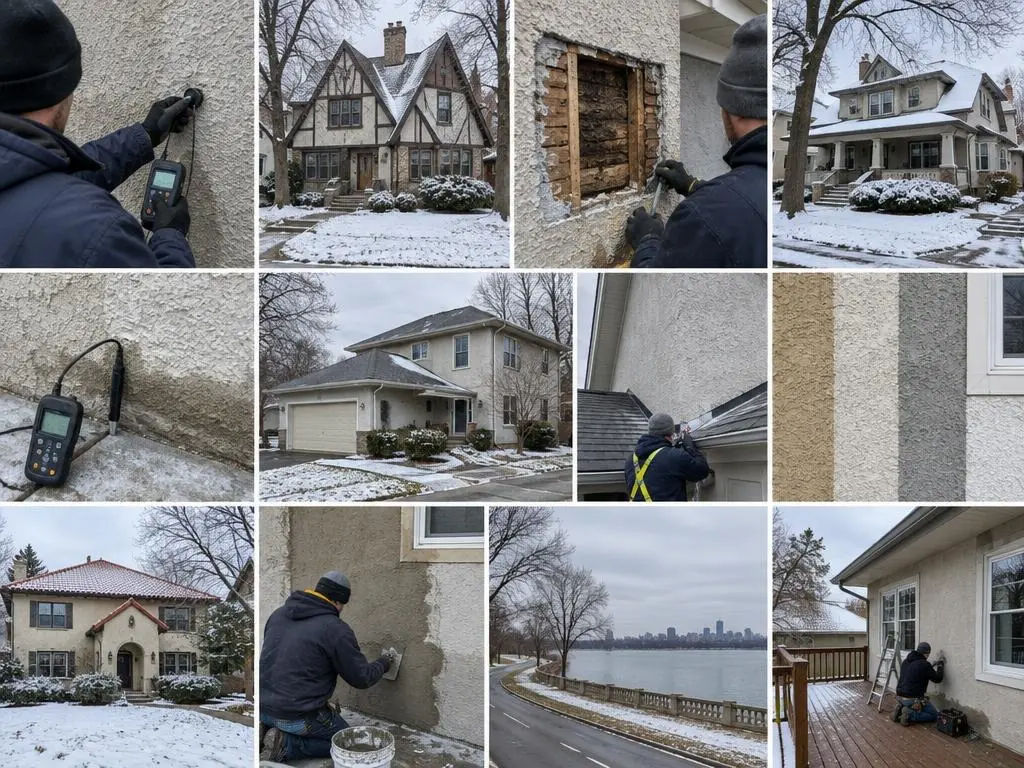
Minnesota's stucco moisture problems began at the end of the 1980s, and Twin Cities home inspector Reuben Saltzman has written that affected houses "always look fine," with usually no visible evidence of hidden damage. Clean, uncracked stucco can sit over soft or rotted sheathing. That is why we do not judge a Minnetonka wall by its face. We drill pairs of small holes at the spots where water tends to get in, such as below window corners, where a roof line meets a wall, and beside deck ledgers, then read the moisture in the sheathing behind.
Where Minnetonka fits in the story
Minnetonka grew in waves. The population roughly doubled between 1950 and 1960, from 11,896 to 25,037, and kept climbing to 48,370 by 1990. Many parts of the city stayed farms and horse pasture until the 1960s, and filled in afterward. That means the city holds a mix: postwar ramblers, homes from the 1970s, and homes from the 1980s, when the city added nearly 10,000 residents (from 38,683 in 1980 to 48,370 in 1990), and the 1990s, the same years when Minnesota stucco homes were failing at high rates elsewhere in the metro. If your home falls in that later window, testing is the first step we recommend before any cosmetic work.
What a test visit looks like
- We walk the exterior and mark probe locations based on the house's design: windows, roof-wall intersections, decks and spots where soil or a patio sits close to the stucco.
- Each probe pair is drilled small, read with a meter, and probed for firmness of the sheathing.
- Holes are sealed with color-matched sealant when we finish.
- You get a written summary of readings by location, with photos, that you can share with a buyer, a seller or your own agent.
- Testing waits for dry weather; readings taken during or right after rain are not reliable.
When the readings come back high
A high reading tells you where to look, not how big the problem is. The only way to size it is to open the wall in that area. We cut back the stucco, look at the sheathing and framing, and then give you a written scope for repair: replacing damaged sheathing, adding a proper weather-resistive barrier and flashing, and rebuilding the stucco in layers. Minnesota's re-siding rules require a building permit for this kind of work, plus inspection of the barrier and flashing, and replacement of any rotted sheathing or framing found once the siding is off. We pull what the city requires before we start.
Repairs we handle in Minnetonka
- Stucco crack repair on walls that test dry
- Moisture testing for buyers, sellers and owners who want a baseline
- Wall remediation where testing finds wet or soft sheathing
- Recoating and color coat once the wall below is sound
- EIFS repair, although true EIFS is uncommon on Minnesota homes
- Patching on older stucco ramblers, matched in texture and color
Testing and selling
If you plan to list, test early. Repairs found in the spring can be done before the market heats up, rather than negotiated in a hurry with a buyer's inspector holding the report. If you are buying, the seller has to give permission for holes to be drilled, so raise it with your agent when the purchase agreement is written.
Call (612) 482-6637 to set up a test or a repair estimate.
Minnetonka Housing and Stucco Facts
- Long-held, high-value homes. Census estimates for 2020 to 2024 put Minnetonka's owner-occupied rate at 71.6% and the median owner-occupied home value at $475,800, with 88.2% of residents in the same house a year earlier.
- Farmland until the 1960s. Many areas of Minnetonka stayed rural, with farms and horse pasture, into the 1960s before the city became fully developed. The population went from 11,896 in 1950 to 48,370 in 1990.
- Damage you cannot see. Minnesota stucco problems began at the end of the 1980s, and a Twin Cities inspector notes that affected homes usually show no visible evidence; drilling small probe holes to test the sheathing is the next best option to opening the wall.
- Lake Minnetonka's eastern tip. The city takes in the eastern tip of Lake Minnetonka, and Minnehaha Creek, the lake's outlet, flows from here through south Minneapolis to the Mississippi River.
Minnetonka Questions
I'm buying a stucco home in Minnetonka. When should I ask for a moisture test?
Write it into the purchase agreement as a contingency, because drilling the walls needs the seller's permission. Plan for a dry day and leave enough time in the inspection period to get a written summary back and, if readings are high, to open a small section before you commit.
Is the test going to leave holes in my stucco?
It leaves small holes, drilled in pairs at selected spots. We seal each one with a color-matched sealant when we finish. On most walls they are hard to find from a few feet away.
My house looks perfect. Do I really need testing?
A clean surface does not tell you much about the sheathing behind it. Inspectors in the Twin Cities have pointed out that homes with hidden damage usually look fine from outside. If your home was built in the late 1980s or 1990s, or has windows, decks or roof lines that meet the stucco without good flashing, testing is the only way to know.
Do repairs in Minnetonka need a permit?
Small crack patching generally does not. Removing and replacing stucco, the barrier behind it or sheathing is re-siding work, and Minnesota requires a building permit and inspections for it. We confirm the city's requirements and handle the permit as part of our quote.
Free Estimates in Minnetonka, MN
Free estimates and moisture testing appointments in Minnetonka.
Stucco Repair Near Minnetonka
- Stucco Repair in Minneapolis, MN
- Stucco Repair in Saint Paul, MN
- Stucco Repair in Edina, MN
- Stucco Repair in Bloomington, MN
- Stucco Repair in Richfield, MN
- Stucco Repair in St. Louis Park, MN
- Stucco Repair in Golden Valley, MN
- Stucco Repair in Plymouth, MN
- Stucco Repair in Maple Grove, MN
- Stucco Repair in Brooklyn Park, MN
- Stucco Repair in Roseville, MN
- Stucco Repair in Eden Prairie, MN
- Stucco Repair in Woodbury, MN
- Stucco Repair in Eagan, MN
- Stucco Repair in Burnsville, MN
- Stucco Repair in Wayzata, MN
- Stucco Repair in Shoreview, MN