
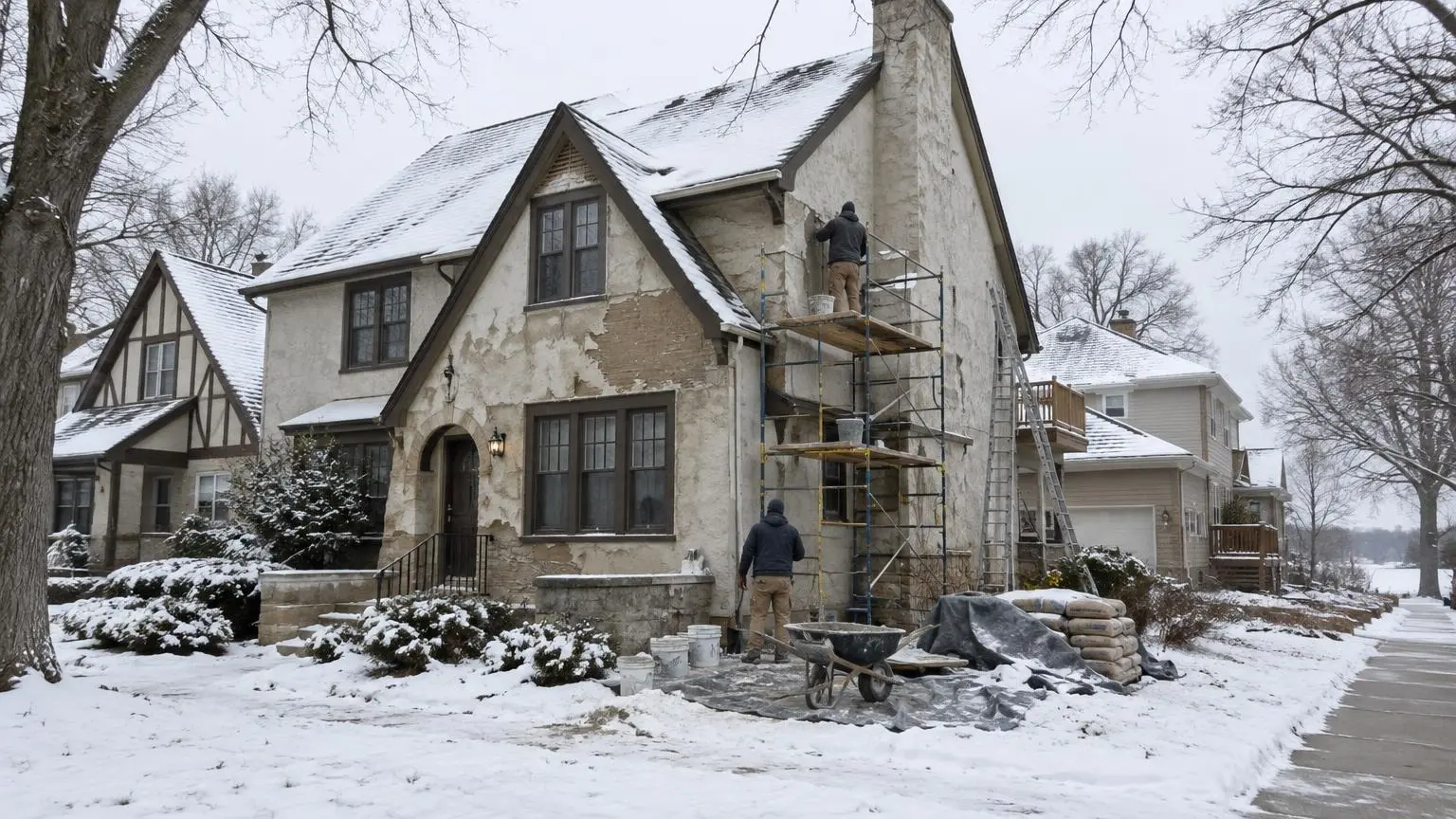
About 60% of homes went up between the late 1940s and early 1950s
Stucco Repair in St. Louis Park, MN
Repairs and re-stucco work for postwar ramblers and the remodels and additions built onto them since, done to Minnesota's re-siding rules.
- Free on-site estimates
- Written, itemized quotes before any work
- Cause of the damage found before patching
Ramblers, Remodels and the Rules for Re-Siding
Stucco repair in St. Louis Park often involves more than the stucco. The city's Wikipedia entry says about 60% of its homes were built in one burst from the late 1940s to the early 1950s, and that 66 subdivisions added about 2,700 homes between 1950 and 1956. Many of those original ramblers have since been expanded, re-sided or partly re-clad. When we repair a wall here, we are often working where stucco meets a newer addition, a replaced window or a different siding material.
A city that filled in quickly
St. Louis Park was incorporated as a village on November 19, 1886, and became a home-rule city in 1954. Before World War II it was a modest streetcar-era suburb of 7,737 people in 1940. By 1950 it had 22,644, and by 1960, 43,310. More than 30,000 new residents arrived between 1940 and 1955. The Kilmer and Shelard Park areas were annexed from Minnetonka in 1953 and 1954. The 2020 census counted 50,010 residents in 25,047 housing units.
When a repair becomes re-siding
Patching a crack or a small damaged area is repair. Stripping a wall and replacing its cladding is re-siding, and Minnesota treats that as permitted work. The Department of Labor and Industry's re-siding fact sheet states:
- Building permits are required for re-siding existing dwellings
- Rotted or damaged sheathing, framing and insulation found after the siding comes off must be replaced, and the municipality should be contacted about inspecting those repairs
- A water-resistive barrier and flashing inspection is required
- Kick-out flashing must be installed when re-siding
- A final re-siding inspection is required when the project is complete
If a St. Louis Park repair grows into that scope, we tell you before it does, and we contact the city about the permit.
Kick-out flashing and the remodel problem
Kick-out flashing is a small piece of metal at the bottom of a roof edge where it meets a wall. It turns roof water away from the stucco instead of letting it run down behind it. The City of Woodbury listed missing kick-out flashing as one of the main causes of Minnesota stucco failures in homes from the late 1980s and 1990s. Additions and dormers built onto older ramblers create exactly the roof-to-wall joints where kick-outs belong. On every St. Louis Park visit, we check those spots and the area below them for staining or soft stucco.
Mixed materials on one house
A rambler with an addition may have original stucco on one side and newer stucco, fiber cement or vinyl on another. The joints between different claddings need proper flashing and sealant, and the stucco edge has to be finished with the right trim rather than just butted up and caulked. We repair those transitions so water sheds outward and the stucco can move without tearing.
Recoating to tie it together
When an older house has patches from several eras, a new color coat across the stucco can make the house look like one building again. We repair cracks and loose areas first, then apply the coat so it bonds to sound material. Census estimates show 57.8% of St. Louis Park homes are owner-occupied, with a median owner-occupied value of $386,800, and recoating is a common step for owners refreshing a house they plan to keep.
Stucco services in St. Louis Park
- Crack and patch repair
- Re-stucco of damaged walls, with permits where required
- Kick-out and window flashing corrections
- Transitions between stucco and other siding
- Recoating and color coats
- Moisture testing and EIFS repair
St. Louis Park sits just west of Minneapolis. Call (612) 482-6637 to book a visit.
St. Louis Park Housing History
- A postwar building burst. About 60% of St. Louis Park homes were built from the late 1940s to the early 1950s, and 66 subdivisions added about 2,700 homes between 1950 and 1956, mostly in the suburban rambler style.
- Growth by the numbers. The population rose from 7,737 in 1940 to 22,644 in 1950 and 43,310 in 1960; the 2020 census counted 50,010 residents and 25,047 housing units.
- Ownership and value. Census estimates for 2020-2024 show a 57.8% owner-occupied rate, a median owner-occupied value of $386,800 and 83.5% of residents in the same house a year earlier.
- Re-siding is permitted work. Minnesota DLI requires building permits for re-siding existing homes, a water-resistive barrier and flashing inspection, kick-out flashing when re-siding and a final re-siding inspection.
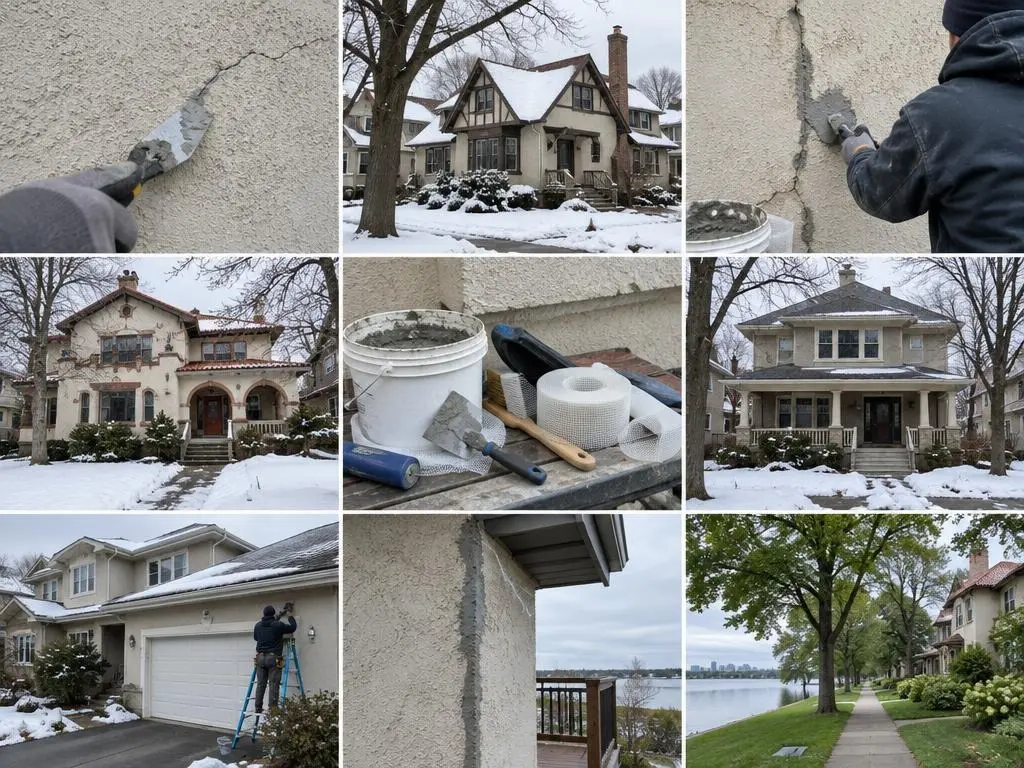
Our Services in St. Louis Park, MN
St. Louis Park Questions
Do I need a permit to repair stucco on my St. Louis Park house?
Small patches and crack repair are generally treated as repair. Replacing the cladding on a wall is re-siding, which Minnesota requires a building permit for, along with flashing inspections. We tell you which applies and contact the city when a permit is needed.
What is kick-out flashing, and does my rambler need it?
It is a small diverter where a roof edge ends against a wall, steering water away from the stucco. Minnesota requires it when re-siding. Houses with additions or dormers are the most likely to have roof-to-wall joints that need one.
My house has stucco on one side and newer siding on another. Is that a problem?
Not by itself, but the joint between the two materials has to be flashed and finished correctly. Poorly detailed transitions are a frequent leak point, so we check and repair them along with the stucco.
Free Estimates in St. Louis Park, MN
Free written estimates for stucco repair in St. Louis Park.
Stucco Repair Near St. Louis Park
- Stucco Repair in Minneapolis, MN
- Stucco Repair in Saint Paul, MN
- Stucco Repair in Edina, MN
- Stucco Repair in Bloomington, MN
- Stucco Repair in Richfield, MN
- Stucco Repair in Minnetonka, MN
- Stucco Repair in Golden Valley, MN
- Stucco Repair in Plymouth, MN
- Stucco Repair in Maple Grove, MN
- Stucco Repair in Brooklyn Park, MN
- Stucco Repair in Roseville, MN
- Stucco Repair in Eden Prairie, MN
- Stucco Repair in Woodbury, MN
- Stucco Repair in Eagan, MN
- Stucco Repair in Burnsville, MN
- Stucco Repair in Wayzata, MN
- Stucco Repair in Shoreview, MN