
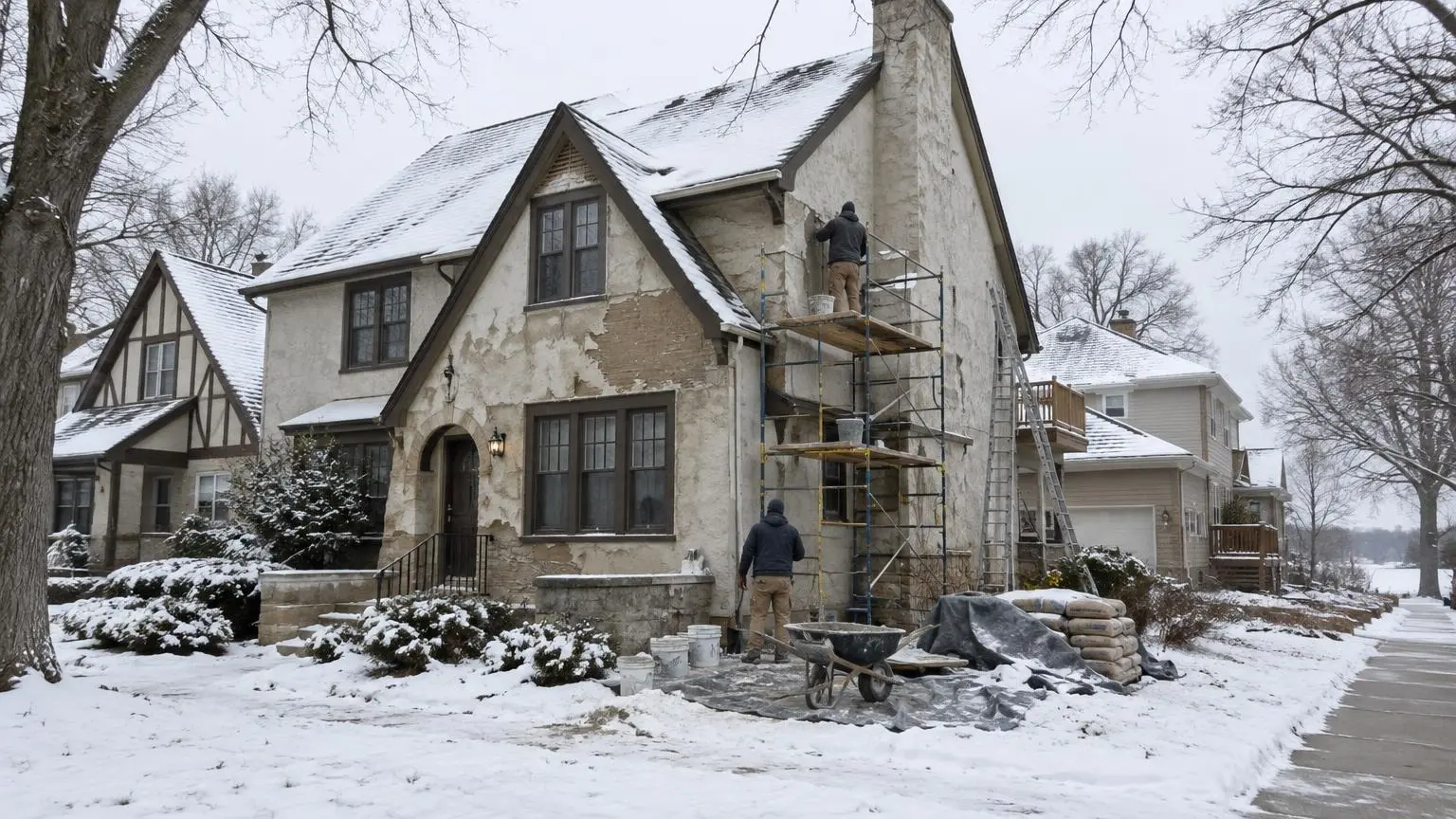
Bungalows, foursquares and revival houses
Historic Stucco Restoration in Minneapolis, MN
Older stucco is softer than modern cement. We repair it with compatible mixes so patches do not crack the wall around them.
- Free on-site estimates
- Written, itemized quotes before any work
- Cause of the damage found before patching
Keeping Original Stucco on Older Minneapolis Homes
Historic stucco restoration is about keeping as much original material as possible and repairing the rest with materials that behave like it. About 44% of the homes in Minneapolis were built in 1939 or earlier, and stucco was a popular finish during that period, especially on bungalows, foursquares, Tudor Revival and Mediterranean-style houses. Many of those walls are still sound after a century. The ones that fail usually do so because of water, or because of past repairs made with the wrong mix.
Why older stucco is different
According to the National Park Service's guidance on historic stucco, stucco before the late 1800s was mostly lime, sand and water. Portland cement was first made in the United States in 1871, and after about 1900 most stucco was portland cement with some lime. Early 20th-century stucco on Minneapolis homes often contains more lime and is softer and more flexible than modern stucco. Portland cement is rigid; when a hard modern patch is set into a softer wall, the two expand and contract at different rates, and the patch normally cracks and lets water in.
How we approach a historic repair
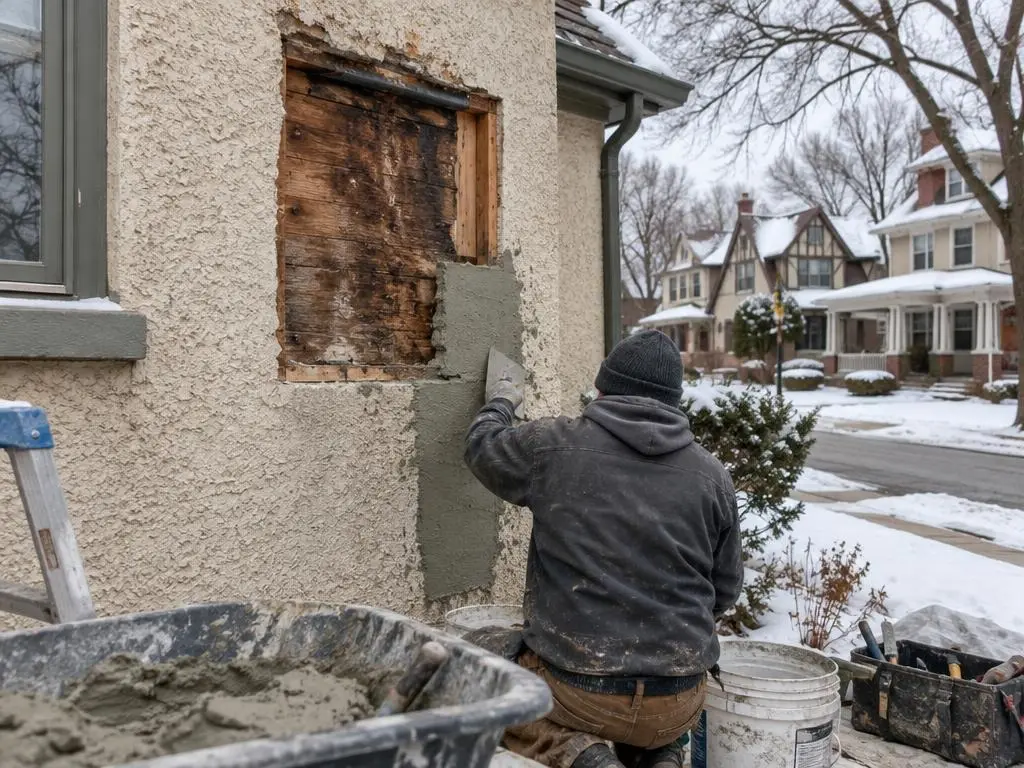
1. Stop the water first. Roofs, gutters, downspouts, flashing and grading are checked, since repairing stucco without fixing the water source wastes the work. 2. Survey every wall. We tap for hollow, delaminated areas and map cracks, bulges and failed past patches. 3. Identify the stucco. A small sample tells us whether the stucco is lime-rich or mostly portland cement, which guides the repair mix. 4. Cut back to sound material. Damaged stucco is removed to sound edges, squared off, without feathering new material over old. 5. Rebuild in matching coats. The number and thickness of coats follow the original, typically a scratch coat, a brown coat and a finish coat. 6. Match the finish. Texture is matched in the finish coat; color comes from sand, pigment or a breathable limewash or mineral coating.
Matching color and texture
Original color on early stucco often came from the sand itself, from natural pigments, or from whitewash and colorwash. The National Park Service recommends letting test samples weather, ideally through a change of seasons, before comparing them with the original. Small, conspicuous patches may not blend on their own, so recoating or limewashing a whole elevation is sometimes the more honest way to make repairs disappear.
Landmarks and historic districts
Minneapolis has more than 150 locally designated landmarks and twelve local historic districts. Exterior alterations to those properties go through heritage preservation review. The city treats limited siding and masonry repair as a minor alteration handled by staff, but material changes that do not meet the district's design guidelines can require a public hearing before the Heritage Preservation Commission. If your home is designated, we confirm the review needed before work starts.
Seasonal limits
Lime-rich mixes cure slowly and are sensitive to cold. The National Park Service advises avoiding stucco work below about 40°F or when frost is possible, and shading and keeping fresh work damp in hot weather. In Minneapolis, historic repairs are scheduled for the mild months.
What This Covers
Historic restoration covers diagnosis, compatible repairs and finish matching.
Condition survey
Tap testing and crack mapping on every elevation, with past repairs noted.
Compatible patch repair
Lime-rich or matched mixes in the original number and thickness of coats.
Removing failed hard patches
Old portland patches that are cracking the wall cut out and replaced.
Finish and color matching
Texture matched in the finish coat; color from sand, pigment or breathable coatings.
Typical Historic Repair Costs
| Job | Published national range |
|---|---|
| Typical crack and patch work | $8 to $50 per sq ft |
| Minor isolated patching | $200 to $600 |
| Cement stucco repair | $8 to $20 per sq ft |
| Water-damage repair | $30 to $50 per sq ft |
Published national ranges for general stucco repair from HomeGuide (February 2026), HomeAdvisor (June 2026) and Fixr (March 2025); none publish historic-specific figures. Lime mixes, hand-matched textures and review requirements can add cost. Your written estimate is the price.
How It Works
1. Survey and sample
We map the damage and identify what the stucco is made of.
2. Fix water sources
Gutters, flashing and grading are addressed before repairs.
3. Repair in matching coats
Compatible mixes go on in the original layers, with proper curing.
4. Match and protect
The finish is matched and the repair protected while it cures.
Historic Stucco Restoration Questions
Why do patches on old stucco crack?
Often because the patch was made with hard portland cement on a softer, lime-rich wall. The two materials move differently with temperature and moisture, so the patch cracks at its edges and lets water in. A compatible mix avoids that.
What is the typical lifespan of a stucco wall?
Many Minneapolis homes still have stucco from the 1910s through the 1930s, so well-maintained stucco can last a century. Keeping water off the wall and making compatible repairs matter more than the original installation date.
Do I need approval to repair stucco on a historic house in Minneapolis?
If the house is a local landmark or in one of the city's twelve local historic districts, exterior alterations go through heritage preservation review. Limited repair is usually a minor, staff-level review; material changes can need a hearing. We confirm before work starts.
Can old stucco be saved or does it need replacing?
Most original stucco can be repaired in sections. Full replacement is usually needed only when large areas have lost their bond or the lath behind has failed. A tap survey shows how much is sound.
Historic Stucco Restoration Service Areas
- Stucco Repair in Minneapolis, MN
- Stucco Repair in Saint Paul, MN
- Stucco Repair in Edina, MN
- Stucco Repair in Bloomington, MN
- Stucco Repair in Richfield, MN
- Stucco Repair in St. Louis Park, MN
- Stucco Repair in Minnetonka, MN
- Stucco Repair in Golden Valley, MN
- Stucco Repair in Plymouth, MN
- Stucco Repair in Maple Grove, MN
- Stucco Repair in Brooklyn Park, MN
- Stucco Repair in Roseville, MN
- Stucco Repair in Eden Prairie, MN
- Stucco Repair in Woodbury, MN
- Stucco Repair in Eagan, MN
- Stucco Repair in Burnsville, MN
- Stucco Repair in Wayzata, MN
- Stucco Repair in Shoreview, MN
Get a Historic Stucco Restoration Estimate
Free estimates for historic stucco repair.